Grandes Ligas

DarvishGIF

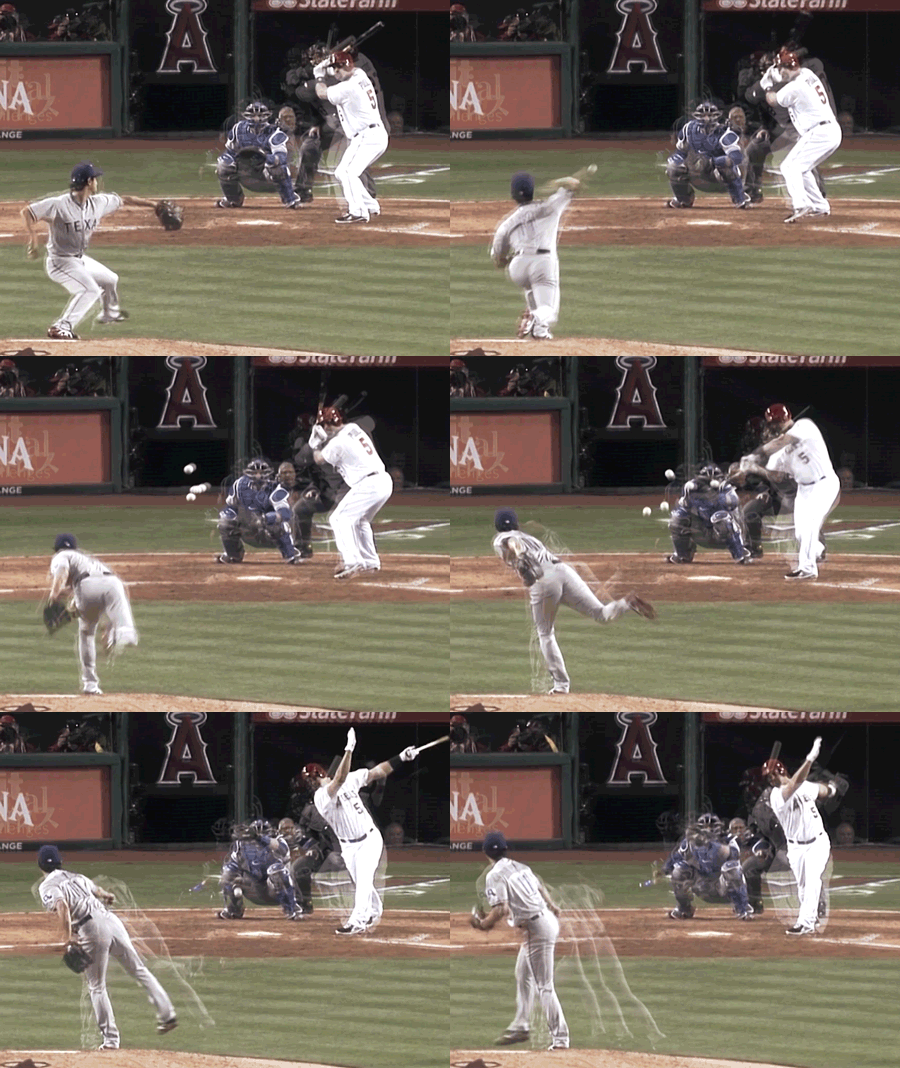
Este fascinante montaje de Drew Sheppard muestra 5 lanzamientos del abridor de los Rangers, Yu Darvish.

Uno de los aspectos fundamentales del béisbol es que cada jugada normalmente comienza por el pitcher, quien debe lanzar la pelota con el objetivo de colocarla dentro de la zona de strike. Según sus posibilidades, cada pitcher logra dominar una serie de lanzamientos: recta, curva, slider, cambio, etc. Cada lanzamiento exige una pequeña variación en la forma como se sostiene la bola, la flexibilidad del brazo, la postura y la distribución del peso del cuerpo el momento de soltar la pelota. El objetivo del pitcher es, por supuesto, ser impredecible: ocultarle al bateador el lanzamiento que acaba de hacer. Obligarlo a descifrar el lanzamiento en milisegundos.

Los gifs animados son una excelente herramienta para ilustrar:

1. Lo difícil que debe ser pararse en el home y tratar de darle a un lanzamiento que, a toda vista, es exactamente igual a todos los anteriores.

2. Lo difícil que debe ser ensayar y repetir tus movimientos hasta un punto en el que nadie pueda saber dónde vas a poner la bola.
 

La generación de la pantalla táctil | Hanna Rosin

mag-article-large

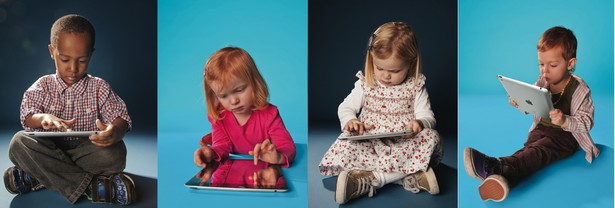
Este artículo de Hanna Rosin está lleno de ideas, citas y estudios relevantes para responder la primera gran pregunta de esta década: ¿está el iPad alterando significativamente la forma como los niños aprenden, se entretienen y se educan?

Previously, young children had to be shown by their parents how to use a mouse or a remote, and the connection between what they were doing with their hand and what was happening on the screen took some time to grasp. But with the iPad, the connection is obvious, even to toddlers. Touch technology follows the same logic as shaking a rattle or knocking down a pile of blocks: the child swipes, and something immediately happens. A “rattle on steroids,” is what Buckleitner calls it. “All of a sudden a finger could move a bus or smush an insect or turn into a big wet gloopy paintbrush.” To a toddler, this is less magic than intuition. At a very young age, children become capable of what the psychologist Jerome Bruner called “enactive representation”; they classify objects in the world not by using words or symbols but by making gestures—say, holding an imaginary cup to their lips to signify that they want a drink. Their hands are a natural extension of their thoughts.

¿Qué pasa cuando ya no tienes que enseñarle a un niño cómo usar un dispositivo? ¿Qué pasa cuando la mayoría crece sin distinguir un computador de cualquier otro juguete? Un sonajero en esteroides, como pone la cita.

Sigue leyendo


Puntos y comas: una historia de amor | Ben Dolnick

draft-semicolon-art-blog427-v2

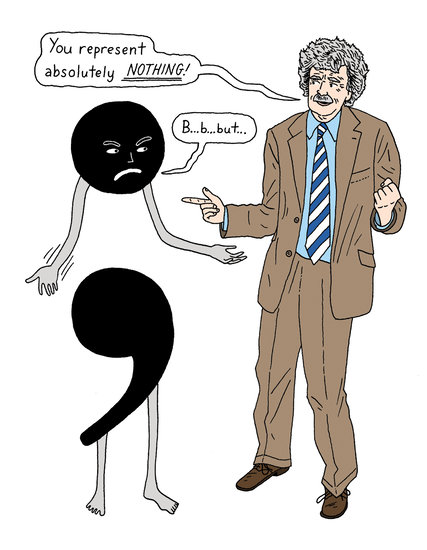
Ben Dolnick nos cuenta cómo pasó de seguir al pie de la letra esta recomendación de Kurt Vonnegut:

Here is a lesson in creative writing. First rule: Do not use semicolons. They are transvestite hermaphrodites representing absolutely nothing. All they do is show you’ve been to college.

A darse cuenta de que:

And so, far from being pretentious, semicolons can be positively democratic. To use a semicolon properly can be an act of faith. It’s a way of saying to the reader, who is already holding one bag of groceries, here, I know it’s a lot, but can you take another? And then (in the case of William James) another? And another? And one more? Which sounds, of course, dreadful, and like just the sort of discourtesy a writer ought strenuously to avoid. But the truth is that there can be something wonderful in being festooned in carefully balanced bags; there’s a kind of exquisite tension, a feeling of delicious responsibility, in being so loaded up that you seem to have half a grocery store suspended from your body.


Sigue leyendo 

trabajo

Tengo los comentarios apagados por esta razón. Si te gusta este post, compártelo con tus amigos.