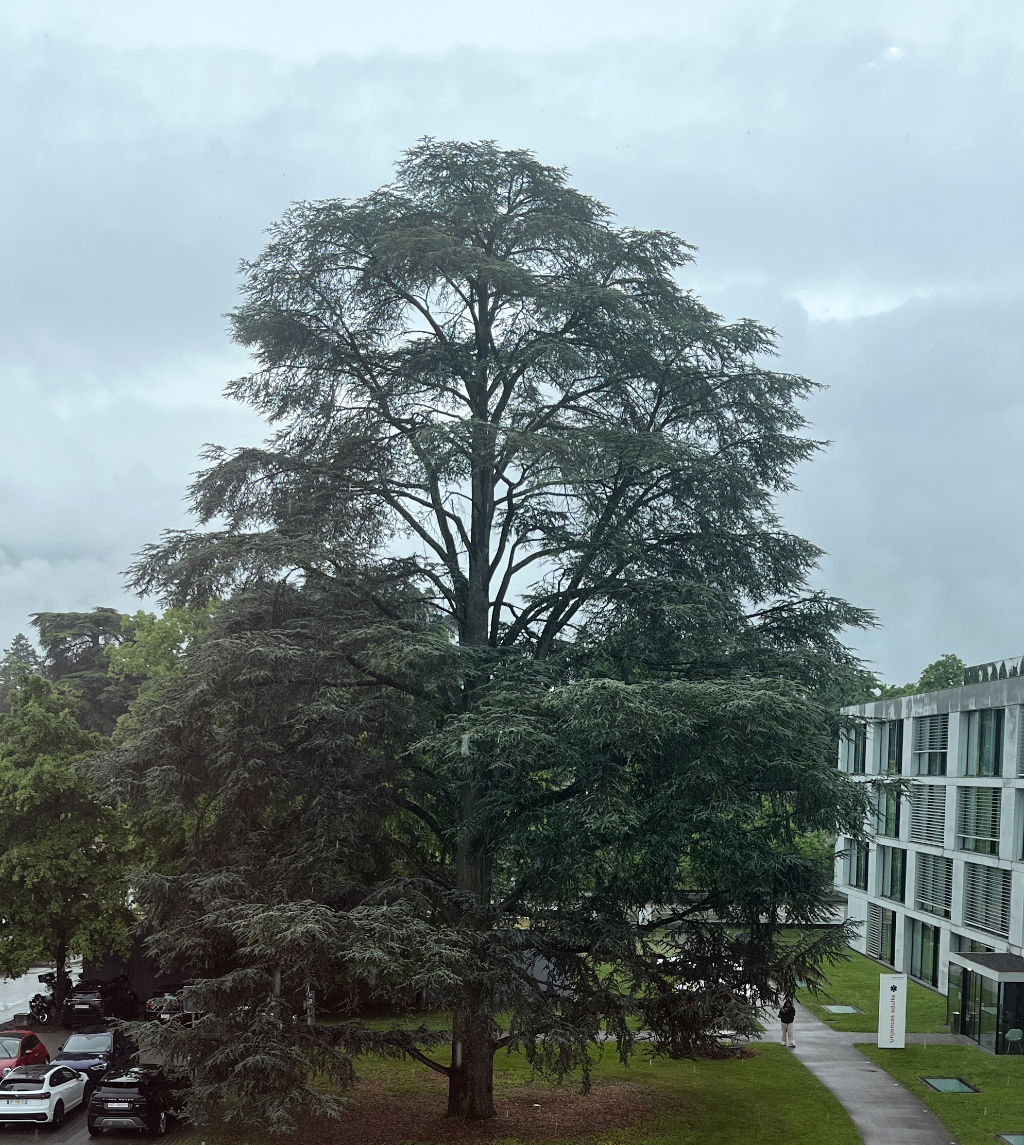
Hay un cedro enorme en el patio del lugar donde me salvaron la vida.
Está en Chêne-Bougeries, cerca de Grange-Canal, en esa Ginebra que todavía conserva rastros del campo entre villas, jardines, clínicas privadas. Tierras de robles y grandes propiedades donde alguien, hace mucho tiempo, decidió plantar especies exóticas.
El árbol que yo veía desde terapia intensiva es un Cedrus atlantica ‘Glauca’, un cedro azul del Atlas. En ese lugar, el inventario de árboles aislados de Ginebra registraba, hace diez años, un ejemplar de 32 metros de alto, 25 metros de copa y 5,40 metros de circunferencia. Cinco metros cuarenta.
Un gigante.
Si estás consciente, tienes pocas opciones para distraerte en terapia intensiva. Terminas concentrado en las cosas que importan: la respiración automática, una máquina que pita al ritmo de tu corazón. Desde ese nido austero, ante el desfile de cuidadores en rotación, el cedro era la constante.
La última noche me trasladaron a otra habitación y pude ver el mismo cedro desde otro ángulo. El árbol estaba ahí, indiferente y vivo. Ya no era un elemento decorativo, sino un compañero en la paciencia, una autoridad silenciosa, allí desde antes de que yo naciera, antes de que nacieran mis padres, antes de que nacieran mis abuelos. Antes de todos nuestros dramas, miedos, exámenes médicos, pequeñas obsesiones e intentos de entender qué significa sobrevivir a algo. Casi todas las personas que estaban vivas cuando plantaron ese cedro ya han sido olvidadas. Un mal día nuestro es un minuto para el gigante. Sabes, como los ents. Una vida medida en siglos.
Y mientras yo estaba en esa cama, habitando un cuerpo que había estado a punto de apagarse, el cedro seguía haciendo lo suyo: respiraba a otro ritmo, crecía a otro ritmo, estaba en el mundo de una manera que para nosotros es incomprensible.
Hay demasiado pajúo por ahí convirtiendo cualquier contacto con la naturaleza en una actuación: abrazando troncos con cara de iluminado, grabándose para Instagram, todo paz y amor y «todo es energía», mientras maltrata a los demás desde su superioridad moral.
El día que me soltaron entendí que a veces esa intimidad no es una actuación, sino un momento privado que decides tener con otro organismo porque no tienes otra forma de hablar con él. Lo primero que hice fue caminar hasta el cedro y ponerle una mano encima. No fue un gesto pensado. Desde la habitación sentía el llamado, la curiosidad de sentir su corteza. Nadie me estaba mirando. No hubo música ni revelación. Solo puse la mano y lo saludé, con un poco de vergüenza: él siempre había estado ahí y yo apenas acababa de verlo. Pero también sabía que no tenía que explicarle nada.
—Hola.
Desde entonces, cada vez que vuelvo por un examen, me acerco, lo toco unos segundos y saludo al gigante. No compartimos lenguaje, sistema nervioso ni urgencia. Solo un ancestro remotísimo y la posibilidad de comunicarnos por el tacto. Qué idea tan sobrecogedora: en algún punto remoto de la historia nuestros caminos se separaron. Uno llegó hasta el gigante. El otro, hasta un mamífero con cría, pastillas en la mesa y conciencia de la muerte.
El cedro no devuelve el saludo. No consuela, no explica nada, no dice que todo va a estar bien. El cedro no tiene respuestas más allá de lo evidente, si es que escuchas. El cedro permanece allí, enorme, extranjero, viejo, azul. Traído de las montañas del Atlas para terminar en un patio de Ginebra, en el lugar donde renací.