Dentro de miles de años los arqueólogos se preguntarán por qué perforábamos el lecho de las ciudades, para qué servían los túneles de metro y cómo hacíamos para construirlos si éramos tan primitivos. Sentirán la misma fascinación que tenemos nosotros por las pirámides o las ruinas de Cusco.
Pero los aspectos más locos, detalles como una perforadora que twittea, se perderán para siempre. Las pequeñas cosas que construimos por pasión y no por utilidad, las historias y los dramas paralelos, lo efímero y oculto detrás de cada gran obra, son los verdaderos tesoros de la ingeniería.
Desde que los comentarios existen, he pensado que son una parte esencial y complementaria de todo sitio web. De hecho, más de una vez he dicho –y seguramente escrito– que uno de los aspectos más maravillosos de la publicación en línea es poder crear un texto vivo, que crece y se complementa con la interacción de los visitantes. El contenido es el texto + los comentarios.
Sure, it’s a mistake to romanticize all this any more than is strictly necessary. Web 2.0 harnesses the stupidity of crowds as well as its wisdom. Some of the comments on YouTube make you weep for the future of humanity just for the spelling alone, never mind the obscenity and the naked hatred.
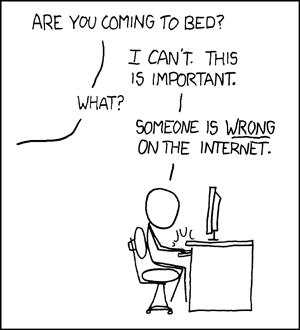
Todo sitio web con comentarios de mala calidad, tiene un problema de manejo de contenidos. Es trabajo del community manager facilitar la creación de un sitio valioso. Los comentarios necesitan tiempo, construir lugares de interacción en la web es difícil y una de las cosas que no quiero hacer con mi blog es tener un trabajo adicional, ni tener conversaciones con extraños o –peor aún– lidiar con trolls y gente ladilla en general. Al final, la intención de este blog es mostrar y preservar lo que me gusta del trabajo de otros. Un espacio privado en intención pero público en ejecución para reportar las afinidades que he conseguido. Si no quiero vender algo, ni vivir del blog, ni crear un espacio libre para que los chicos se diviertan, seguir teniendo un blog con comentarios es meterme en problemas, abrir puertas que no quiero abrir, o buscar excusas para pelear.
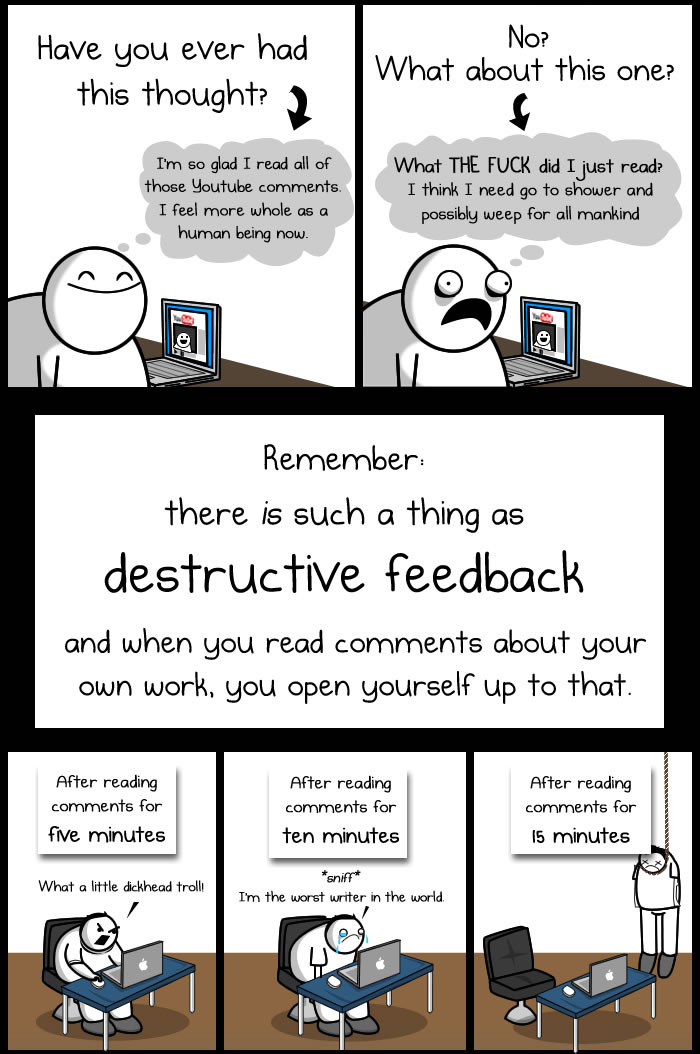
Yo pensaba que invertir tiempo en la interacción, curar la sección de comentarios, era… un momento, Matthew Inman, de The Oatmeal, lo dice mejor en esta entrevista:
I used to think it was an integral part of being a writer or artist—that you have to read comments, and you have to react to them, and you have to mold your work around them. But that doesn’t make me a better artist—if anything, it just makes me doubt myself. So I just don’t read any of it, because I can’t help focusing on that one negative one where some guy writes something awful. I’ve found that my comics are becoming more and more of a rhetorical performance. I just want to draw things that I hope are funny and put them on the web, and that’ll be the extent of the communication, to preserve my own sanity more than anything.
Antes de quitar los comentarios, pensé que me estaría perdiendo el valioso feedback de Vinz, Elgranj, Yta, John, o Ramiro. Pero resulta que la única gente que me importa y enseña, sigue hablándome, comentando y compartiendo los post por otros medios. Este es un resultado super obvio, pero mi sobredosis de bullshit 2.0 me impedía verlo (¿2.0? so passé ¿qué tal 3.0?) . Pienso que ahora la experiencia de lectura en afinidades está mejor, más limpia. Prolija, diría Plácido.
Así que fire-and-forget ha sido mi actitud en estos meses. Conversando con Héctor me di cuenta de que esa puede ser la clave para sobrevivir en ambientes con mucho ruido, en el mudo físico o virtual. Si funciona lo que escribes, alguien lo compartirá en Facebook o en twitter, o –mejor aún– escribirá un post. Todo eso sin tu intervención, sin el masajeo, sin el «gracias por tu comentario», sin estar pendiente de una notificación más en el teléfono. Suficiente. Escribe, sólo escribe. Haz tu trabajo, no te distraigas.
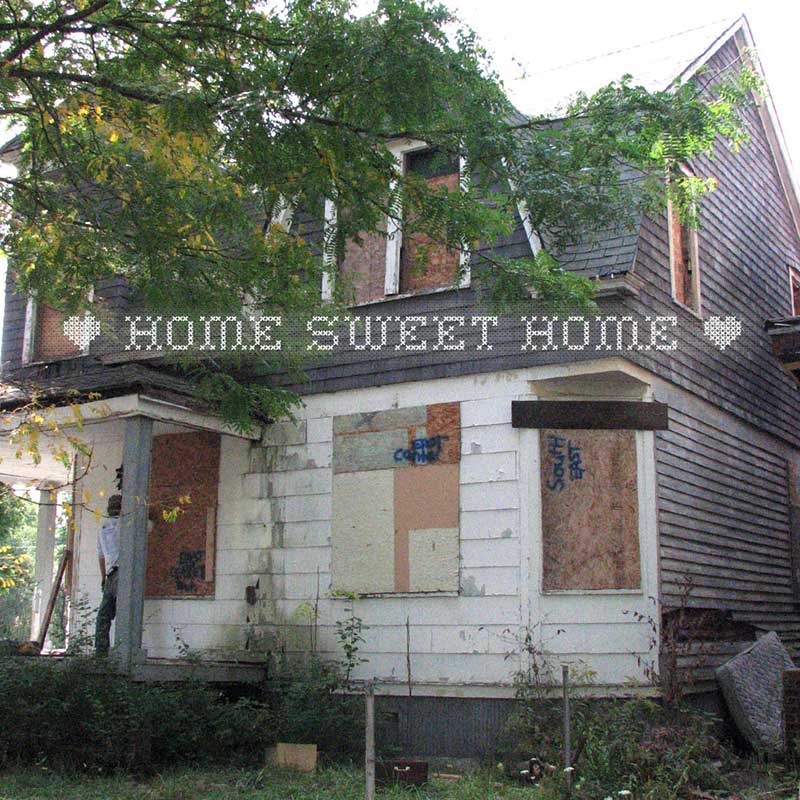
Durante la misma época, Drew Philip compró una casa por $500 en un barrio caído en desgracia. Hace poco, publicó un poético relato de su lucha contra la corriente ¿Por qué?:
I wanted something nobody wanted, something that was impossible. The city is filled with these structures, houses whose yellowy eyes seem to follow you. It would be only one house out of thousands, but I wanted to prove it could be done, prove that this American vision of torment could be built back into a home. I also decided I would do it the old-fashioned way, without grants or loans or the foundation money pouring into the city. I would work for everything that went into the house, because not everyone has access to those resources. I also wanted to prove to myself and my family I was a man. While they were building things, I had been writing poems.